AI with Michal

Evergreen requisitions

Always-on job postings or standing reqs that keep accepting and nurturing applicants across multiple hires, used for high-volume or evergreen hiring where the pipeline should not reset after each offer.

Michal Juhas · Last reviewed May 3, 2026

What are evergreen requisitions?

Evergreen requisitions stay open across multiple hires so one posting can keep collecting applicants while recruiters run batches of screens and offers. Teams use them for always-on hiring, but they need extra hygiene so candidates know where they stand.
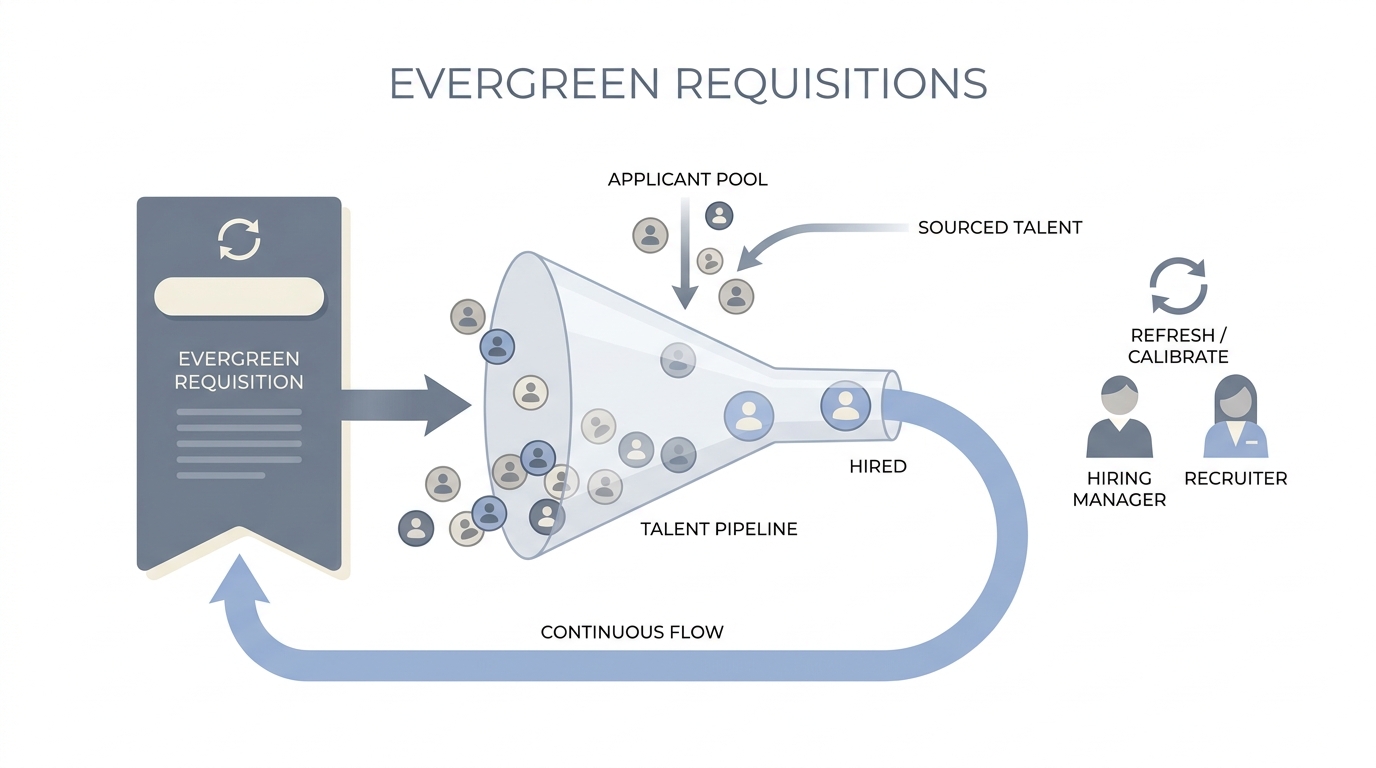
Illustration: a standing open requisition with a steady funnel of candidates and a loop suggesting the role stays open across hires alongside a small talent pool

In practice

  • Campus teams say "evergreen reqs" when one posting feeds intern classes across seasons with refreshed cohort tags.
  • Retail TA keeps "always-on" store lead postings while district managers hire in waves from the same pipeline.
  • Vendors label templates "evergreen" when the ATS allows multiple hires without cloning the req each time.

Quick read, then how hiring teams use it

This is for recruiters, sourcers, TA, and HR partners who need the same vocabulary in debriefs, vendor calls, and policy reviews. Skim the first section when you need a fast shared picture. Use the second when you are deciding how it shows up in the ATS, sourcing tools, or candidate communications.

Plain-language summary

  • What it means for you: A job posting or req that stays warm while you hire multiple people into the same profile over time.
  • How you would use it: You keep marketing and sourcing steady while you batch interviews and offers with clear candidate updates.
  • How to get started: Pick one high-volume family, define SLAs, and write the candidate-facing paragraph that explains timing.
  • When it is a good time: When demand is predictable, when cloning reqs every month wastes time, or when you want a single inbound URL.

When you are running live reqs and tools

  • What it means for you: ATS rules, dedupe logic, and consent all need evergreen-specific configuration or metrics lie.
  • When it is a good time: Before campus season, before opening a new market, or after a compliance review of stale applicants.
  • How to use it: Pair evergreen with nurture tracks and pool tags; automate only after manual runs feel boring.
  • How to get started: Map how hires close without archiving the req; test webhook payloads on multi-hire events.
  • What to watch for: Candidate confusion, bloated pipelines, sourcers reworking the same CSV exports, and marketing still advertising paused families.

Where we talk about this

AI in recruiting workshops compare evergreen pipelines with ethical automation and realistic SLAs. Bring anonymized funnel charts to Workshops.

Around the web (opinions and rabbit holes)

Third-party creators move fast. Treat these as starting points, not endorsements, and double-check anything before you wire candidate data.

YouTube

  • Search "evergreen recruiting pipeline" for TA ops talks about continuous hiring and employer brand balance.
  • Search "high volume hiring ATS" for demos that show multi-hire workflows (verify dates on each video).

Reddit

  • r/recruiting threads on high-volume and retail hiring often discuss always-on reqs versus seasonal clones.

Quora

  • Search "evergreen job posting recruiting" for mixed practitioner takes; verify any process claim against your ATS documentation.

Related on this site

Frequently asked questions

When are evergreen reqs a good idea versus one-off postings?
They help when demand is continuous (retail, support, campus pipelines) and you want steady inbound instead of stop-start advertising. They hurt when hiring managers treat the req as a junk drawer for unrelated profiles or when compliance needs a dated posting tied to each approval cycle. Document which families qualify, how often recruiters sweep stale applicants, and how candidates learn whether the role is still real. If you combine evergreen with async screening, publish maximum wait times before human review so trust stays high. Revisit eligibility quarterly because business conditions change faster than ATS templates.
How do you prevent candidate ghosting or confusion?
Refresh careers copy monthly, show realistic headcount bands instead of vague "always hiring" language, and send status nudges when someone sits untouched too long. Segment pipelines by location and work authorization so people do not assume silence means rejection. Pair evergreen messaging with transparent data retention: tell candidates how long profiles stay warm and how to withdraw. If marketing runs parallel microsites, sync closing language when a family pauses or you will train applicants to ignore future emails. Measure complaint themes separately from offer metrics so brand issues surface early.
What reporting breaks if your ATS assumes one hire per req?
Classic time-based metrics and approval workflows assume a closed loop per hire. Evergreen setups need alternate keys (hire waves, cohort tags) or dashboards double-count applicants. Finance may see inflated top-of-funnel numbers unless you dedupe by person and req pair. Work with analytics to define "active candidacy" windows so conversion rates stay interpretable. When workflow automation triggers fire on stage change, confirm they do not spam hiring managers on every evergreen touch. Document how internal transfers interact with evergreen counts so headcount debates stay grounded.
How does this relate to proprietary talent pools?
Evergreen reqs often feed a proprietary talent pool when you tag silver medalists instead of discarding them after each wave. You still need consent, source attribution, and deletion paths that match your privacy policy. Recruiters should see why someone entered the pool and which req family they applied through, or outreach feels random. Automate tagging with human-readable reasons, not only model scores, so compliance can audit why a candidate reappeared six months later. Avoid mixing evergreen applicants with executive search prospects in the same list without clear segmentation.
What governance checks belong on a quarterly review?
Posting accuracy, stale applicant counts, SLAs for first human touch, and whether sourcing spend still matches active headcount plans. Include hiring manager satisfaction and recruiter time spent on hygiene tasks like dedupe and nurture emails. Review consent language when regulations change or when you add new channels (SMS, WhatsApp). Check that archived evergreen reqs truly stop collecting applications in every locale, including third-party aggregators that mirror your feed. Close each review with explicit renew or pause decisions per family so nobody relies on informal hallway agreements.
Where can we pressure-test evergreen design?
Bring funnel screenshots to an AI in recruiting workshop so peers can critique candidate messaging and SLAs. Compare notes with Talent acquisition leaders who run campus programs at scale. The foundations course (Starting with AI: the foundations in recruiting) helps teams align on measurement before layering automation. Membership office hours help when your ATS vendor proposes a schema change that would split evergreen applicants across duplicate reqs.

← Back to AI glossary in practice