Sourcing funnel metrics
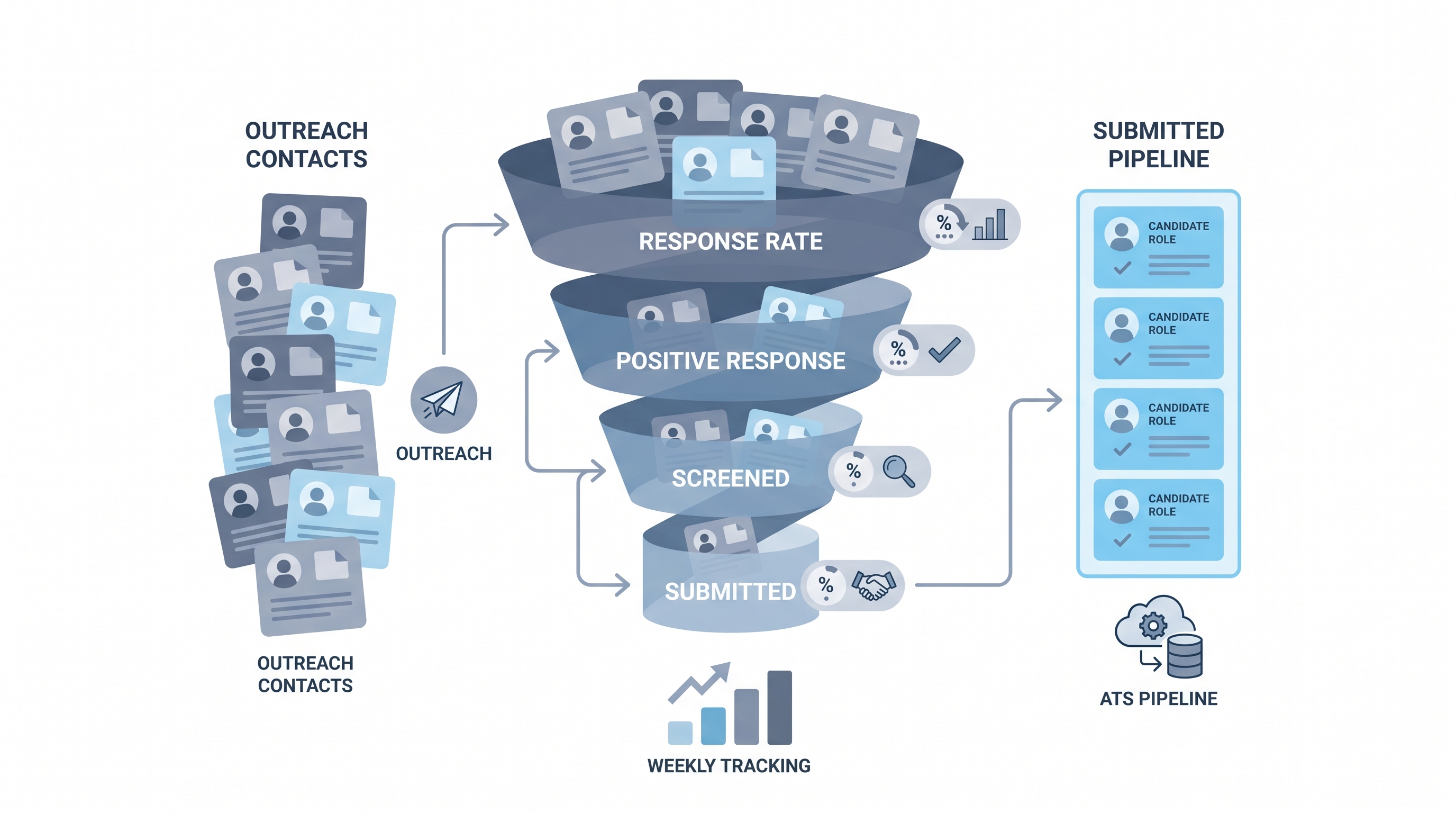
The conversion rates and volume counts that track how candidate flow moves from first outreach or discovery through response, qualification, and into an active pipeline stage in the ATS.
Michal Juhas · Last reviewed May 4, 2026
What are sourcing funnel metrics?
Sourcing funnel metrics are the conversion rates and volume counts that track how candidate flow moves from first contact through response, qualification, and into an active pipeline. They tell sourcers whether outreach is landing, whether the right profiles are being contacted, and whether the sourcing channel is converting into actual hires.
The most useful metrics sit at the conversion steps, not at the top. Raw outreach volume is easy to inflate and tells you little without a matching response rate and qualified-per-reply count.
In practice
- A sourcer reviewing a two-week sprint sees 300 contacts sent, 48 replies, and 9 qualified conversations. She reports response rate (16%) and contacted-to-qualified (3%) to her TA lead, not just "sent 300 messages."
- When a new AI drafting tool doubles outreach volume but response rates drop from 22% to 11%, the team traces the drop to over-used subject lines and resets the message rotation before burning the LinkedIn pool.
- A TA ops lead asks sourcers to log the first source channel in the ATS at profile discovery, not at application, so she can eventually tie source-of-hire data back through the full funnel.
Quick read, then how hiring teams use it
This is for sourcers, TA leads, and TA ops practitioners who need the same vocabulary in pipeline reviews, vendor evaluations, and sourcing automation debriefs. Skim the first section for shared language. Use the second when configuring dashboards or calibrating AI-assisted outreach.
Plain-language summary
- What it means for you: Sourcing funnel metrics are the numbers between "I sent 200 messages this week" and "three people entered the hiring process." The steps in between tell you what is working and what needs changing.
- How you would use it: Pick response rate, positive response rate, and contacted-to-qualified as your three weekly checkpoints. Review by channel and by req family so trends are visible before they become problems.
- How to get started: Export last month of outreach from your sequencing tool and map the three metrics above. If positive response rate is below 10%, investigate message quality before adding volume.
- When it is a good time: Before increasing outreach volume or before adding AI automation to sequencing, so you have a baseline to compare against.
When you are running live reqs and tools
- What it means for you: At scale, funnel metrics are how you catch automation failures early. A sudden drop in response rate while send volume holds steady usually signals a template problem, not a pipeline shortage.
- When it is a good time: After every major change: new message variants, new AI drafting model, new sourcing channel, or new ICP criteria. Metric movement tells you which variable mattered.
- How to use it: Wire funnel metric alerts in your sequencing tool or a shared spreadsheet. Set a floor threshold (e.g., response rate below 10% triggers a pause and manual review). Log which AI prompt and message variant each batch used so you can trace drops to a root cause.
- How to get started: Standardize source field tagging in your ATS from day one. Without consistent source attribution, funnel metrics are directional at best and misleading at worst when leadership asks which channel produced the last ten hires.
- What to watch for: Vanity volume (send count, impressions) crowding out conversion signals. High send counts with flat or falling response rates are a waste of quota and a channel-burn risk, especially on LinkedIn where send limits are enforced.
Where we talk about this
AI with Michal sourcing automation workshops cover sourcing funnel metrics as the feedback loop that keeps AI-assisted outreach honest. Teams build live funnel reports, calibrate message variant testing, and discuss which signals belong in a weekly TA review versus a sourcing debrief. Come with your real outreach export and your current ATS source field report.
Around the web (opinions and rabbit holes)
Third-party creators move fast. Treat these as starting points, not endorsements, and double-check anything before you wire candidate data.
YouTube
- Recruiting Metrics That Matter (Recruiting Daily Advisor) covers conversion-focused reporting for teams building their first sourcing dashboard.
- Sourcing Metrics and KPIs for Recruiters (AIHR) walks how to connect sourcing activity to hire outcomes in a format built for TA practitioners.
- How to Measure Sourcing Effectiveness (SHRM) explains response rate benchmarking and why internal trends outperform industry averages.
- What sourcing metrics do you track? in r/recruiting has candid responses from working sourcers about which numbers actually drive decisions.
- Outreach response rates dropping? in r/recruiting surfaces real-world diagnoses of funnel drops and which fixes worked.
- Sourcing automation and metrics in r/RecruitmentAgencies includes discussion on how automation changes funnel metric baselines.
Quora
- How do I measure the effectiveness of my recruiting sourcing? collects practitioner perspectives on funnel measurement and attribution (read critically for context-specificity).
Key sourcing funnel metrics quick reference
| Metric | Formula | What it tells you |
|---|---|---|
| Response rate | Replies / contacts sent | Messaging and targeting quality |
| Positive response rate | Positive replies / contacts sent | Real interest, filtered for declines |
| Contacted-to-screened | Screening calls / contacts sent | Qualification hit rate |
| Screened-to-submitted | Submissions / screening calls | Sourcer-to-hiring-manager conversion |
| Source-to-offer | Offers / contacts from channel | End-to-end channel value |
Related on this site
- Glossary: Talent acquisition metrics, AI sourcing tools, Candidate data enrichment, Workflow automation, Few-shot prompting
- Blog: AI sourcing tools for recruiters
- Guides: Sourcers
- Course: Starting with AI: the foundations in recruiting
- Live cohort: Workshops
- Membership: Become a member